Applications Open for NIAS Safe Haven Fellowships
Source: NIAS
The Netherlands Institute for Advanced Study in the Humanities and Social Sciences (NIAS), in partnership with The University of Amsterdam, Maastricht University and the Royal Netherlands Academy of Arts and Sciences (KNAW) offers the five-month Safe Haven Fellowship to scholars, artists, writers, and journalists who can’t dotheir work in their current location or circumstances due to conflict or war, by offering them temporary relocation and the opportunity to continue their work. Applications for the first semester of 2027–2028 can be submitted until 14 December 2026 at noon (CET).
2026 African Investigative Journalist of the Year Finalists Announced
Source: AIJC
The finalists for the 2026 African Investigative Journalist of the Year include: Your Eyes, Their Data, by Naipanoi Lepapa, in collaboration with Julia Lindblom of Göteborgs-Posten and Ahmed Abdigadir of Svenska Dagbladet, on how footage from Meta’s AI-powered glasses is routed to Nairobi-based data annotators; Nine Lives: King Cat and His Tender Empire, by Jeff Wicks of South Africa’s News24, who traced a tenderpreneur’s capture of a R360-million police tender; and Lead In Their Blood: Poor Oversight, Regulatory Failure Expose Nigerians to Slow Death from Battery Recycling, by Folashade Ogunrinde and Oladeinde Olawoyin of the Premium Times, with The Examination, Nigeria.
Tarbell Fellowships for Reporting on AI
Source: Tarbell Center
The Tarbell Fellowship is a one-year program for journalists and subject-matter experts who want to cover artificial intelligence, and it consists of a three-month training program and a nine-month newsroom placement. It starts with a remote course in June 2027 covering AI and journalism fundamentals, followed by a weeklong in-person session before newsroom placements from September 2026 to May 2027. Previous host newsrooms include CBS News, The Bureau of Investigative Journalism, MIT Technology Review, TIME, and many others. Applications for the 2027-28 Tarbell Fellowship are open and will close on Nov. 22, 2026.
Egyptian Authorities Detain Entire Matsadaash Newsroom
Source: IPI
Authorities confirmed that they detained Abdallah Qadri, Mohamed Ashraf, Mohamed Adel, Islam Barakat, Mohamed Mahmoud, and Omar Helal — the editorial team of the Egyptian fact-checking and investigative outlet Matsadaash — and charged them with terrorism offences and “destabilizing” the country through disinformation. The International Press Institute (IPI) and the Committee to Protect Journalists (CPJ) called for their immediate release and urged Egyptian authorities to stop using national security laws against the press in retaliation for critical reporting. Several of the detained journalists have reported that security officers tortured them and interrogated them for hours.
Funds for Countering Disinformation in the Republic of Moldova
Source: Funds for NGOs
Canal France International (CFI) is accepting applications for projects to strengthen independent journalism and fight disinformation in the Republic of Moldova — to counter an environment in which Moldovan audiences have “increasingly been exposed to misleading or unverified information, including information related to public policies and Moldova’s closer cooperation with the European Union.” The program is run by CFI and funded by the French Ministry for Europe and Foreign Affairs. Three media outlets will receive grants of up to €30,000 (US$34,000), with an indicative total budget of €90,000 (US$US102,000). Apply by October 17, 2026.
Inaugural Equality Fund Journalism Fellowship 2027
Source: The Equality Fund
The Equality Fund is partnering with Canadian Journalists for Free Expression (CJFE) and African Women in Media (AWiM) to “surface the stories of local solutions to global crises,” with a focus on gender. Five five journalists in ODA-eligible countries will be selected for fellowship, which will run from January to September 2027, with a stipend of up to CAD$4,000 (US$2,927) and reporting costs up to CAD$500 covered. Applications are welcome from working journalists on any platform (text, digital, video, audio). Journalists should be reporting on their own communities and geographies. The application deadline is November 8, 2026.
ICIJ Africa Coordinator Released from Custody and Deported from Djibouti
Source: Reuters
According to the International Consortium of Investigative Journalists (ICIJ) this week South African journalist Micah Reddy, who heads up ICIJ’s Africa program, and local reporter Mohamed Willo Ismael (“Kooki Mahmoud”) were detained in Djibouti, prompting the Committee to Protect Journalists (CPJ) to urge Djiboutian authorities to confirm their safety. On Tuesday, September 22, a CPJ update stated that Reddy had been freed and deported to South Africa: "Authorities claim he did not have proper media accreditation. He will return to Johannesburg soon. His fixer, Kooki Mahmoud, is apparently released without charge," CPJ Africa posted on Twitter/X.
DIG Festival Begins September 23, 2026 in Modena, Italy
Source: DIG Festival
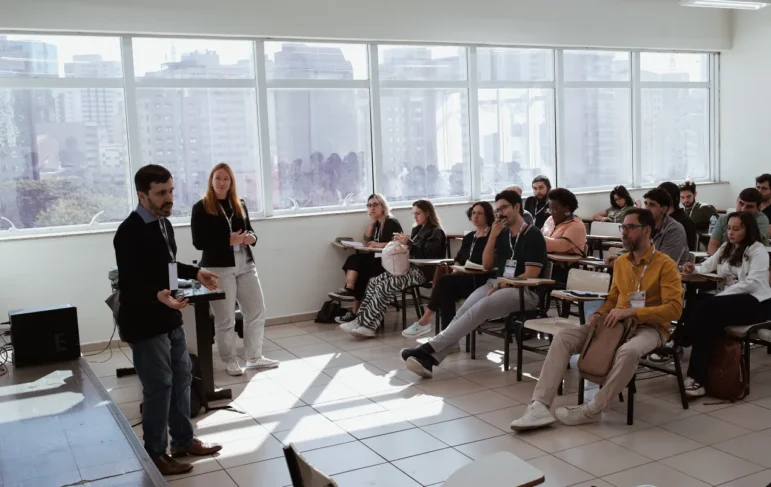
The 12th DIG Festival (“Documentari, Inchieste, Giornalismi” or documentaties, investigaitos, journalism), Europe’s premier multimedia investigative journalism festival, will take place September 23-26 in Modena, Italy. Participation and attendance at the festival are free and except certain screenings, do not require tickets or registration. The program includes panel discussions, presentations, DIG Academy — which is offering 12 new, free-to-attend workshops — and the screening of 25 new investigative films shortlisted for the annual DIG Awards. The opening ceremony and awards ceremony will be available for live streaming on DIG Festival’s YouTube channel.
South Africa: Apply for Henry Nxumalo Foundation General Fund
Source: The Henry Nxumalo Foundation
The Henry Nxumalo Foundation, originally set up in 2006 as the Taco Kuiper Fund, provides grants to individuals and organizations to produce public interest investigative journalism on topics relevant to South Africa. Applications can be made on a rolling basis for work in any medium, from individuals, teams, or a publication or broadcaster; the Fund will assign an editor to work with you. Applicants should send a brief proposal (no more than three pages), a CV, and a budget to henrynxumalofund@gmail.com. (The Fund also now makes occasional calls for grant applications that cover multiple African countries.)
Quarterly Deadline for Fund for Investigative Journalism Grants
Source: Fund for Investigative Journalism
Freelance journalists, staff reporters and media outlets can apply for grants and other support from the Fund for Investigative Journalism (FIJ). Investigations can be for print, online or broadcast stories, books, documentaries or podcasts. The FIJ reviews proposals for regular grants up to US$10,000 three or four times a year; the next deadline is Monday, September 14, 2026; the deadline for small grants up to US$2,500 for preliminary reporting that can lead to full investigations is also September 14. The FIJ’s Alicia Patterson fellowships — US$40,000 for 12 months or US$20,000 for six months — are awarded annually.